
Last reviewed September 23, 2026
If you are a veteran buying a home in Pennsylvania, the basic VA loan rules are the same as anywhere else in the country. What changes is everything around the loan: property taxes, state veteran benefits, the houses you are likely to buy, local closing practices, military installations, and sometimes state laws that affect a difficult credit file.
I am Carlos Scarpero, a mortgage loan originator with Edge Home Finance. I am based in Dayton, Ohio and licensed to originate VA loans in Pennsylvania. A large part of my business is VA loans, especially the files that are not perfectly clean: bad credit, manual underwriting, old collections, prior bankruptcies, foreclosures, unusual properties and veterans who have already been told no somewhere else.
On this page I am going to separate three things: what the VA actually requires, what is specific to buying a home in Pennsylvania, and what an individual lender may have added as an overlay. That third one matters. A lender saying no does not automatically mean the VA said no.
Pennsylvania veteran? See if you qualify in 30 seconds. No credit pull.

What is on this page
- What is a VA loan, in plain English?
- What does a VA loan actually get you in Pennsylvania?
- Is there a VA loan limit in Pennsylvania?
- Do disabled veterans get a property tax break in Pennsylvania?
- What if you are buying near a military installation in Pennsylvania?
- Why does residual income matter?
- What will a VA appraiser commonly catch on a Pennsylvania house?
- How do Pennsylvania property taxes and closing practices affect your cash to close?
- Can you buy a condo, duplex, manufactured home or fixer-upper in Pennsylvania?
- What if credit, bankruptcy or foreclosure is the real problem?
- What if the Pennsylvania house you want needs work?
- How long does a VA loan take to close in Pennsylvania?
- Pennsylvania VA loan questions I get all the time
- How do you start a Pennsylvania VA loan with me?
What is a VA loan, in plain English?
A VA loan is a mortgage guaranteed by the U.S. Department of Veterans Affairs for eligible service members, veterans and qualifying surviving spouses. The VA does not make the loan. A lender makes the loan, and the VA guarantees a portion of it, which is why lenders can offer terms no conventional loan matches.
The three advantages that matter most: no down payment required for a qualifying purchase with full entitlement, no monthly mortgage insurance, and no VA-set minimum credit score. The funding fee is the trade most borrowers accept in exchange for those advantages.
VA HANDBOOK SUMMARY
VA exempts several categories of borrowers from the funding fee. The exempt groups include veterans receiving VA compensation for service-connected disabilities, veterans who would be entitled to that compensation but for receipt of retirement pay, veterans with a pre-discharge memorandum disability rating, and eligible surviving spouses receiving dependency and indemnity compensation.
If you draw VA disability compensation, do not let anyone quote you a funding fee. It comes off the loan. On a $300,000 first-use purchase, the 2.15 percent fee is about $6,450 you do not pay if you are exempt. And when the funding fee does apply, it can normally be financed into the loan amount rather than paid in cash at closing.
Source: VA Lender’s Handbook (Pamphlet 26-7) – Chapter 8: Borrower Fees and Charges and the VA Funding Fee
The practical takeaway: do not compare a VA loan to another mortgage by looking at the interest rate alone. Compare the down payment, mortgage insurance, funding fee status, closing costs and actual monthly payment.
What does a VA loan actually get you in Pennsylvania?
The typical Pennsylvania home has a median listing price near $315,000 and a median sold price near $326,000 as of September 2026, per realtor.com, and it spent about 51 days on market. Pennsylvania Association of Realtors MLS data ran hotter this summer: a median sold price of $320,000 in May 2026 and a record $340,000 in June. Label whichever metric you are looking at, because the range is real.
Pennsylvania is not one market. Philadelphia and Pittsburgh set their own pace, the Lehigh Valley and Harrisburg corridors run strong, and rural counties trade well below the statewide median. The good news for VA buyers is that Pennsylvania’s price points fit comfortably inside VA’s 2026 county limits almost everywhere in the state.
Put that into mortgage terms. A 5 percent down payment on a $326,000 Pennsylvania house is $16,300 before closing costs. A qualifying veteran with full entitlement can make that same purchase with no down payment and no monthly mortgage insurance.
What Pennsylvania veterans usually get wrong before they call me
- They assume VA sets a minimum credit score. It does not.
- They assume the VA appraisal is a home inspection. It is not, and you still want an inspection.
- They assume zero down means zero cash needed in every scenario. Escrow, earnest money and appraisal gaps can still require cash.
- They confuse seller-paid normal closing costs with VA seller concessions. Two different buckets, two different rules.
- They assume Pennsylvania’s disabled-veteran property tax exemption is automatic with a 100 percent rating. It is not automatic. It is need-tested.
- They budget for the payment but not for Pennsylvania’s three separate tax bills and two billing calendars, which change escrow and prorations at closing.
Is there a VA loan limit in Pennsylvania?
No. With full entitlement, VA does not cap your loan amount. Your practical limits are what you can qualify for, what the property appraises for, and what an individual lender will approve.
Where a limit appears is partial entitlement: another VA loan still outstanding, entitlement tied up in another property, or a prior VA loan where entitlement was never fully restored. Then the county conforming limit is used to calculate your remaining guaranty.
The Pennsylvania part is simple: every county except one sits at the 2026 baseline of $832,750. The exception is Pike County, in the Poconos, which FHFA designated high-cost for 2026 at $1,209,750. If you are buying in the Poconos with partial entitlement, that higher number is the one that counts.
Veterans with full entitlement face no loan limit regardless of county. But if you are keeping a current house with a VA loan and buying the next one, I calculate your remaining entitlement against the applicable county limit. You may not need to sell the first house. My VA bonus entitlement calculator runs the math.
Story time: a plan with a date on it

She had the entitlement for a second VA loan. The deal still came down to the rent.
The problem. A veteran already had a VA loan on her current house and wanted to buy a new primary home while keeping the first one. Her family was going to rent the old place from her. She had strong credit, a car lease, student loan payments, and one ugly extra debt: she had financed a backyard pool, backed out when she stopped trusting the contractor, lost the deposit, and was left paying off the balance.
What I did. I ran her remaining entitlement first, and she had enough left to buy the next house with no money down. That was the easy part. The harder question was whether she could carry both payments, so I put the existing mortgage, the new payment, the car, the student loans and the pool balance together, counted her drill pay, and told her it looked workable before we touched her credit. Then I started with a soft pull rather than a hard one.
How it ended. The file paused. Her family decided the rent on the old house was more than they wanted to pay, so the rental income that made the numbers work disappeared and she chose to wait.
Entitlement tells you what VA may guarantee. It does not tell you whether you qualify for the next house while keeping the current one. The departing residence is usually where these deals are won or lost.
See If You Qualify Or call or text me at 937-572-3713.
Do disabled veterans get a property tax break in Pennsylvania?
Yes, and it is one of the strongest in the country. A qualifying disabled veteran’s principal dwelling is exempt from all three layers of Pennsylvania real estate tax: county, municipal and school district. That is the bill that usually stings the most, the school tax, wiped out entirely. Full detail on the Pennsylvania disabled veteran property tax exemption.
But read this part twice, because Pennsylvania is unusual: the exemption is need-tested, not automatic. You qualify with a 100 percent permanent service-connected rating, TDIU, service-connected blindness, paraplegia, or loss of two or more limbs, and you must also show financial need. On January 1, 2025 the State Veterans’ Commission set the presumptive need level at $114,637 of annual income. At or below that number, need is presumed. Above it, you can still qualify if your documented allowable monthly expenses, with a cost-of-living allowance, exceed your monthly household income.
You apply through the County Director of Veterans Affairs in your county of residence, not through a state office, and the Pennsylvania DMVA runs questions through [email protected]. The exemption extends to unmarried surviving spouses under a 1985 constitutional amendment, though the surviving-spouse application mechanics should be confirmed with your county office at publish time.
One more operational detail: because the exemption wipes out the entire real estate tax bill, an exempt veteran’s escrow should carry taxes at $0. But bills issued before the exemption is approved still need payment or refund handling, so the timing between closing and approval is a real first-year escrow issue.
Pennsylvania law, verified against the PA Department of Military and Veterans Affairs and Title 51, Chapter 89
- Full exemption from county, municipal and school-district real estate taxes on the principal dwelling, owned solely or jointly with spouse. Authority: PA Constitution Article VIII, Section 2(c); Title 51, Chapter 89; procedures Title 43, Chapter 5.
- Disability threshold: 100% permanent service-connected rating, or TDIU, or service-connected blindness, paraplegia, or loss of two or more limbs.
- Financial need required: $114,637 or less annual income is presumed eligible (State Veterans’ Commission adjustment effective January 1, 2025); higher earners qualify with documented expenses exceeding income.
- Apply through your County Director of Veterans Affairs; DMVA contact [email protected].
- Surviving-spouse extension exists under the 1985 constitutional amendment; confirm current DMVA application mechanics before filing.
Sources: PA DMVA, Real Estate Tax Exemption; Scaringi Law (Jan 2018); PA Senate GOP program history. Accessed September 22, 2026.
What if you are buying near a military installation in Pennsylvania?
Pennsylvania does not have a Fort Bragg or a Fort Hood. It has no major active-duty combat-arms posts. Its military footprint is Army depots, professional education and Navy logistics, which means the VA buyer base here skews heavily toward civilian DoD employees, Guard and Reserve members, and career military families who stayed after their service, not PCS-ing active-duty troops.
The installations that matter for buyers:
- Letterkenny Army Depot (Chambersburg) — Army ammunition and air-defense logistics, maintenance and munitions center.
- Tobyhanna Army Depot (Pocono region) — the largest full-service electronics maintenance facility in the Department of Defense.
- Carlisle Barracks (Carlisle) — home of the U.S. Army War College, senior professional military education.
- Naval Support Activity Mechanicsburg — Navy logistics hub, home of Naval Supply Systems Command.
- NSA Philadelphia — Navy logistics and Defense Logistics Agency presence.
- Fort Indiantown Gap (Annville) — the state’s primary National Guard training site and headquarters.
- Air National Guard wings: the 171st Air Refueling Wing (Pittsburgh) and the 193rd Special Operations Wing (Middletown).
If you are buying in the Chambersburg, Poconos, Carlisle, Harrisburg or Mechanicsburg corridors, the practical point is the same as anywhere else: start early enough to calculate entitlement, get the occupancy documentation right, and deal with appraisal timing before a relocation date turns into an emergency.
Why does residual income matter?
Residual income is the VA’s signature underwriting feature, and it is the reason files that look weak on paper sometimes get approved. It is the money left over each month after the mortgage payment, taxes, insurance and the family’s major obligations are subtracted from gross income. The VA publishes a table of minimum residual income by region and family size. Pennsylvania is in the Northeast region, by property location, not by where the borrower lives.
VA HANDBOOK SUMMARY
The standard is 41 percent or less.
That sentence is about the debt-to-income ratio, and the word that matters is “standard.” It is a guide, not a ceiling. Above 41 percent is not an automatic denial. This is where residual income does the heavy lifting: residual income that exceeds the table guideline by at least 20 percent is a documented compensating factor for a debt ratio above 41 percent.
That is why I care so much about the whole file. A borrower with a higher DTI but strong residual income, stable employment, clean housing history and cash reserves can look very different from a borrower whose DTI happens to fall under 41 percent but has almost nothing left at the end of the month. This is also why VA disability income, BAH and other tax-free income need to be entered correctly.
Source: 38 CFR §36.4340(d), via VA Lender’s Handbook (Pamphlet 26-7) – Chapter 4: Borrower Credit Underwriting
Pennsylvania’s 2026 Northeast-region residual income numbers, for loans of $80,000 and above: a family of one needs $450, two needs $755, three needs $909, four needs $1,025, and five needs $1,062, plus $80 for each additional family member up to seven. For loans under $80,000 the numbers are lower: $390, $654, $788, $888 and $921, plus $75 per additional member up to seven.
One VA rule that helps many buyers here: eligible non-taxable income, like VA disability compensation, can be grossed up by 25 percent when calculating effective income. That is a VA rule, not a Pennsylvania rule, and it applies everywhere. Getting the gross-up applied correctly is part of why I run the numbers myself instead of trusting a quick calculator.
You can check your own numbers with my VA residual income calculator. It is the fastest way to see whether your file has the breathing room that lets a higher DTI still work.
What will a VA appraiser commonly catch on a Pennsylvania house?
This is where Pennsylvania needs its own page instead of another generic article about VA appraisals.
The VA appraiser is not performing a home inspection. The appraiser is looking at value and also determining whether the property meets VA Minimum Property Requirements. In 2026 those rules changed in ways that matter a lot in Pennsylvania, so read this before you assume what will be flagged.
VA HANDBOOK EXCERPT
“Any defective lead-based paint is a safety hazard that must be remediated.”
That is the pre-1978 rule, and it did not change. What changed in February 2026 (Change 46, effective for appraisals ordered on or after May 1, 2026) is the other side of it: on properties built in 1978 or later, defective paint on the dwelling can now be considered cosmetic. In Pennsylvania’s older housing stock, peeling exterior paint was one of the most common VA appraisal repair conditions. For post-1978 houses, that deal-killer is largely gone.
Change 46 also removed the radon requirement in its entirety, removed the old rule that forced appraisals “subject to” removal of hazardous detached sheds and outbuildings, and removed the written-acknowledgment requirement for non-vented heaters. None of that lowered the safe, sound and sanitary bar. It removed specific paperwork conditions that were killing otherwise good files.
Two more things from the current chapter that come up constantly. The appraisal is not an inspection: “The fee appraiser will not perform operational checks of mechanical systems or appliances.” And utilities do not have to be on at the time of the appraisal. That matters for vacant Pennsylvania properties where a seller has shut everything off.
What tends to matter in Pennsylvania
| What may get flagged | Why it is common in Pennsylvania | Typical path forward |
|---|---|---|
| Defective paint on pre-1978 homes | Old housing stock in Philadelphia, Pittsburgh and the mill towns; pre-1978 defective paint is still presumed lead-based and must be remediated | Scrape and repaint defective areas before closing; post-1978 peeling paint on the dwelling is now cosmetic |
| Water in the basement | High water tables, old stone foundations and hillside lots; active seepage is a health-and-safety issue | Address drainage and sump systems; cosmetic dampness history alone is different from active intrusion |
| Roof condition | Snow load, ice dams and freeze-thaw wear; the handbook standard is that the roof covering must prevent moisture entry and provide reasonable future utility | Repair or replace only if defective; there is no minimum roof age or required years of remaining life in Chapter 12, so numbers you hear otherwise are lender overlays |
| Private well and septic | Common in rural counties; VA has specific testing and distance rules for wells and septic systems | Test early in the process; do not assume a rural property “always passed before” |
| Rowhome and twin party walls | Philadelphia and Pittsburgh rowhomes share structural walls; deterioration affects the whole row | The appraiser looks at the subject property, but shared-wall conditions still have to be safe and sound |
How do Pennsylvania property taxes and closing practices affect your cash to close?
Pennsylvania has the most fragmented property tax system of any state I write about. Your buyer sees three separate bills: county, municipality or township, and school district. And they run on two different calendars: county and municipal bills follow the calendar year and usually go out in February or March, while school-district bills follow a fiscal year and go out July 1. The school bill is usually the largest of the three.
Each bill has its own discount window: typically 2 percent off if paid within about two months of issue, face amount for the next two months, then up to a 10 percent penalty, with unpaid year-end balances turned over to the county tax claim bureau. Because the bills land in different halves of the year with different discount windows, Pennsylvania escrow analyses frequently true-up around bill timing. First-year estimates should be based on the actual reassessed millage after your purchase, not on the prior owner’s frozen assessment.
Then there is Pennsylvania’s signature closing-cost line item: the realty transfer tax. It is typically 2 percent total, 1 percent state plus about 1 percent local, and it is customarily split 50/50 between buyer and seller, though it is negotiable. On a $326,000 purchase, the buyer’s half is about $3,260. Outliers matter: Philadelphia runs about 4.278 percent total, and Pittsburgh and Alleghany County can reach up to 5 percent. If you are buying in either market, model the higher number.
VA HANDBOOK EXCERPT
“Any seller concession or combination of concessions which exceeds four percent of the established reasonable value of the property is considered excessive, and unacceptable for VA-guaranteed loans.”
The four percent cap applies only to concessions: things like the seller paying your VA funding fee, prepaying taxes or insurance beyond the prorated share, paying off your debts or judgments, or buying the rate down above the market rate. Normal closing costs the seller pays are not concessions and are not capped: title charges, the appraisal, recording fees, the survey, origination charges and discount points at the market rate all fall outside the four percent bucket.
That distinction matters when structuring an offer. A VA buyer with little cash does not necessarily need the seller to reduce the price. In some situations, a properly structured seller credit does more for the veteran than a price reduction. In Pennsylvania, the seller’s half of the transfer tax is already customarily seller-paid, so the concession math starts from there.
Want to see what the payment and cash to close might look like with the tax bills and insurance baked in? Run the scenario through my VA mortgage calculators first, then we can sharpen it.
Can you buy a condo, duplex, manufactured home or fixer-upper in Pennsylvania?
Usually, yes, but each property type has its own rules.
Condos
A condominium project generally needs to meet VA’s project-approval requirements. Do not wait until three weeks into the transaction to find out the condo is not approved. Philadelphia has real condo concentrations, so this comes up more there than people expect. Check approval status before you fall in love with the unit.
Two to four units
VA can finance an owner-occupied two-, three- or four-unit property. You have to occupy one unit as your primary residence, and documented rental income from the other units may help with qualification subject to VA and lender requirements. Pittsburgh’s duplex and multi-unit stock makes this a real option in western Pennsylvania.
Manufactured homes
VA allows qualifying manufactured homes, but the rules are specific: permanent foundation, proper classification as real property, and lender overlays that narrow the field. In rural Pennsylvania counties, manufactured housing is common and titling paperwork must be clean. The property needs to be reviewed before assuming the loan will work.
Fixer-uppers
A house that needs work can still be a VA purchase, but the Minimum Property Requirements have to be met or cured before closing. That is the subject of the next section. Here is how VA renovation loans work in Pennsylvania.
If you are still mapping out which loan structure fits your situation, my mortgage quiz walks through the property-type decision.
What if credit, bankruptcy or foreclosure is the real problem?
This is the part of my practice that keeps me busiest, so let me be direct.
VA HANDBOOK SUMMARY
VA does not establish a universal minimum credit score for VA-guaranteed loans. VA’s credit analysis looks at the borrower’s overall credit pattern: payment history, housing history, what caused the credit problems, whether they have been resolved, and residual income. The score minimums you hear are lender overlays, not VA requirements.
If one lender’s overlay stops you, that is a conversation about that lender. It is not a ruling from the VA. My national page on bad credit VA loans goes deeper on how I work these files.
Source: VA Lender’s Handbook (Pamphlet 26-7) – Chapter 4: Borrower Credit Underwriting
Bad credit
The score matters because lenders use it, pricing is affected by it and certain VA lenders will not go below their own cutoff. For the Pennsylvania specifics, see bad credit VA loans in Pennsylvania.
But the actual VA credit analysis goes much deeper than a three-digit number. Payment history matters. Housing history matters. What caused the problem matters. Whether the problem has been resolved matters. Residual income matters. And the lender you are using matters.
Collections
Do not automatically start paying old collections because someone told you that is what VA requires. Some collections may not need to be paid off at all. Medical collections, non-medical collections, judgments and federal debts are not treated identically. Before moving money around, let the actual underwriting rule tell us what needs to happen.
Manual underwriting
Sometimes the automated underwriting system does not issue an approval even though the veteran may still fit VA guidelines. That is where manual underwriting comes in. A human underwriter evaluates the file, including housing history, credit pattern, residual income, compensating factors and the reasons behind the credit issues. It is more documentation. It is not automatically a denial. My national page on VA manual underwriting covers that path. See how this plays out locally in VA manual underwriting in Pennsylvania.
Bankruptcy
A prior bankruptcy does not mean your VA benefit is gone. The timing and documentation depend on what type of bankruptcy it was, when it was discharged or dismissed, what caused it and what your credit looks like afterward. The standard VA benchmarks are typically two years from discharge for Chapter 7, and favorable consideration after one year into a Chapter 13 with 12 months of satisfactory payments and court or trustee approval. Those are VA benchmarks, not the only path. My national pages on VA loans after bankruptcy and VA loans after foreclosure go deeper. The state walkthrough is VA loans after bankruptcy in Pennsylvania.
Foreclosure in Pennsylvania
Pennsylvania foreclosure is judicial: the lender files suit in the Court of Common Pleas and the process ends in a sheriff’s sale. Pennsylvania also requires the Act 6 and Act 91 pre-foreclosure notices, which give the borrower 30 days to cure or seek state assistance before suit can be filed, and borrowers can cure the default up to one hour before the sale. There is no post-sale redemption right in Pennsylvania, and lenders can pursue deficiency judgments for the shortfall.
For VA’s two-year seasoning rule, the defensible completion date is the sheriff’s sale and deed transfer, not the complaint filing date.
What if the Pennsylvania house you want needs work?
A house that needs work can still be a VA purchase if the work fits inside a program that handles it. Pennsylvania’s older housing stock means this question comes up constantly: the rowhome with the tired kitchen, the twin with the ancient bathroom, the farmhouse with a roof at the end of its life.
VA renovation loans exist for exactly this situation. VA sets no dollar cap on the repairs, but every lender’s renovation program has its own budget ceiling, draw schedule and contractor rules, and those have to be understood before the contract is signed. The budget has to be priced against what the program allows, not against what the house deserves. My national page on VA renovation loans walks through how the structure works.
Two honest options when the scope is too big for the program: phase the work, starting with the health-and-safety items the VA requires and doing the rest later, or look at a different property. Pretending the numbers fit when they do not wastes everyone’s season.
Story time: a plan with a date on it
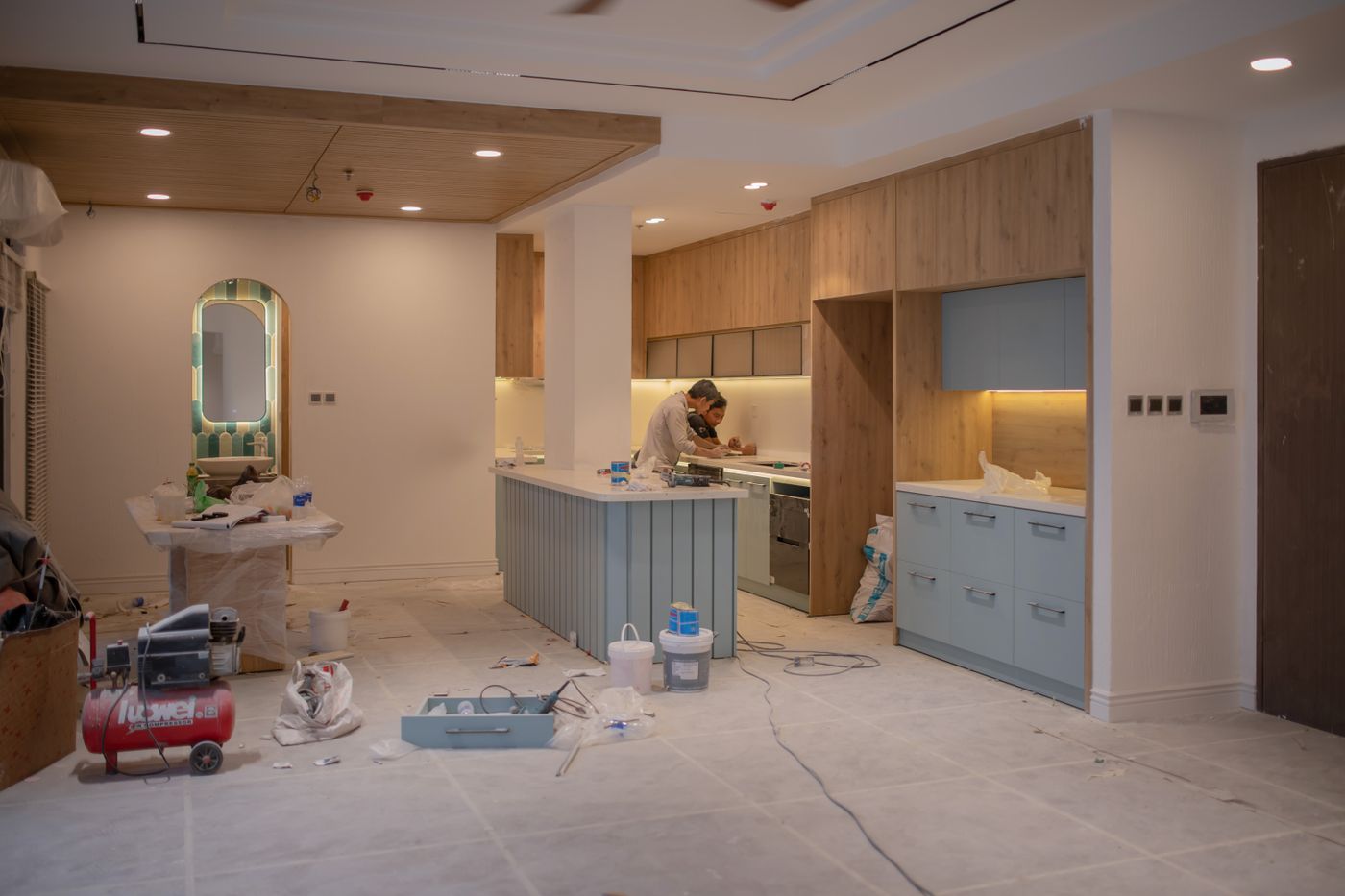
The renovation budget was bigger than the program allows.
The problem. The property needed more work than the VA renovation structure available on that file would support, and pretending otherwise would have wasted everyone’s summer.
What I did. We priced the work against what the program allows, then looked at the alternatives honestly: phasing the work, a different property, or a different loan structure for the rehab portion.
How it ended. They are choosing between a smaller scope now and a different structure later. Both paths are real, neither was oversold.
Know the program’s ceiling before you fall in love with the scope of work.
See If You Qualify Or call or text me at 937-572-3713.
How long does a VA loan take to close in Pennsylvania?
A clean VA purchase in Pennsylvania typically closes in 30 to 45 days. What stretches the timeline is rarely the VA itself. It is the file: credit documentation, appraisal repair conditions, condo approval, renovation draws, or a property with title or tax issues.
Pennsylvania-specific items that add days: the three-bill tax system and the need to get prorations right at closing, transfer-tax calculations that differ by county, and condo questionnaire turnaround in the Philadelphia market. None of these are surprises if they are lined up early. They become emergencies only when they are discovered late.
Appraisal timing matters here too. VA appraisals are ordered through the VA’s system, and turn times move with market volume. If you are buying on a relocation timeline, especially around the summer PCS season, build the appraisal into the schedule from day one.
Pennsylvania VA loan questions I get all the time
What credit score do I need for a VA loan in Pennsylvania?
VA does not set a universal minimum credit score. Individual lenders establish their own credit-score overlays, so being turned down by one lender does not automatically mean you are ineligible for a VA loan. The lower the score and the more recent the credit issues, the more important the rest of the file becomes. My national page on bad credit VA loans goes deeper.
How much down payment do I need for a VA loan in Pennsylvania?
A qualified borrower with sufficient VA entitlement can generally purchase with no down payment. Partial entitlement, an appraisal below the purchase price or a borrower choosing to put money down can change that calculation. Every Pennsylvania county except Pike sits at the $832,750 baseline for 2026, so the remaining-entitlement math is the same nearly statewide.
Do disabled veterans pay property taxes in Pennsylvania?
It depends on the rating and the need test. Veterans with a 100 percent permanent service-connected rating, TDIU, service-connected blindness, paraplegia or loss of two or more limbs can get a full exemption from county, municipal and school-district real estate taxes on their principal dwelling, but they must also show financial need. Annual income of $114,637 or less is presumed eligible; higher earners can still qualify with documented expenses. You apply through your County Director of Veterans Affairs. See the full section above or my disabled veteran property tax guide.
Can I keep my current house and use my VA benefit again?
Possibly. If your entitlement has not all been restored because another VA loan is still outstanding, I calculate your remaining entitlement against the applicable county loan limit, which is $832,750 everywhere in Pennsylvania for 2026 except Pike County at $1,209,750. You may not need to sell the first house. My VA bonus entitlement calculator runs the math.
Can I buy a manufactured home with VA in Pennsylvania?
Potentially, yes. Manufactured housing has additional property and lender requirements, and many lenders impose overlays beyond the VA rules. In rural Pennsylvania counties the titling and conversion paperwork must be clean, and the home must be on a permanent foundation and classified as real property. The house itself needs to be reviewed before assuming the loan will work.
Can I buy a duplex with a VA loan in Pennsylvania?
Yes. VA financing can be used for qualifying two- to four-unit properties when you will occupy one of the units as your primary residence. Rental income from the additional units may be usable subject to underwriting requirements. Pittsburgh’s duplex and multi-unit stock makes this a real option in western Pennsylvania.
Can I buy an older home with a VA loan?
Absolutely. An old house does not fail a VA appraisal because it is old. Condition is the issue. A well-maintained century-old rowhouse can be perfectly acceptable while a neglected 20-year-old property may have significant MPR problems. Remember that under Change 46, peeling paint on a post-1978 house is now cosmetic, while pre-1978 defective paint still must be remediated.
Do sellers have to pay VA buyer closing costs?
No. The seller and buyer negotiate closing-cost credits as part of the purchase contract. In Pennsylvania the seller customarily pays half of the realty transfer tax already, and VA rules give sellers significant flexibility to help with additional costs, but the seller is not automatically required to pay them. Normal seller-paid closing costs are not capped; the four percent limit applies only to seller concessions.
Is the VA appraisal a home inspection?
No. An appraisal establishes value and reviews the property against VA requirements. It is not a substitute for an independent home inspection. The fee appraiser does not perform operational checks of mechanical systems or appliances. I still want my buyers to understand what they are actually buying.
Can I qualify for VA with a high debt-to-income ratio?
Sometimes. VA does not treat 41 percent as a simple hard stop. Residual income, tax-free income, credit history and other factors can materially change the analysis. Pennsylvania is in the Northeast region, where a family of four needs $1,025 in residual income on loans of $80,000 and above. That is one of the reasons I would rather run the actual scenario than give you a generic DTI cutoff.
How do Pennsylvania property taxes work for a new buyer?
Expect three bills on two calendars: county and municipal bills on the calendar year, and the school-district bill on a fiscal year starting July 1. Each bill has a discount window, a face-amount window and then penalties, with unpaid balances eventually turned over to the county tax claim bureau. The school bill is usually the biggest. If you are a qualifying disabled veteran with the exemption approved, the tax side of your escrow can drop to $0.
How do you start a Pennsylvania VA loan with me?
Start with my 30-second qualification quiz.
It is not a credit pull.
It gives me enough information to figure out what we actually need to look at next.
What I want to know
- Where in Pennsylvania are you buying?
- Have you used your VA entitlement before?
- Is another VA loan still outstanding?
- Do you receive VA disability compensation?
- What price range are you considering?
- Is the house move-in ready or does it need work?
- Are you active duty, Guard or Reserve, or a civilian DoD employee?
- Has another lender already told you no?
- If so, exactly what reason did they give you?
The more unusual the scenario, the more useful those details become.
Ready to talk about a specific house?
Start the application and mention the property in the notes. If you would rather just ask a question first, call or text me at 937-572-3713.
Start my Pennsylvania VA loanIf you are still learning how the benefit works, start with my complete VA loan guide. You can also work through my mortgage quiz to see where your file stands.
Carlos Scarpero, Mortgage Loan Originator, NMLS #1674385 | Edge Home Finance, LLC, NMLS #891464 | Licensed to originate VA loans in Pennsylvania | 937-572-3713 | Equal Housing Opportunity. Nothing here is tax or legal advice, and no content on this page is a commitment to lend.